ByJohn A
Benefits of Digital Thread Implementation
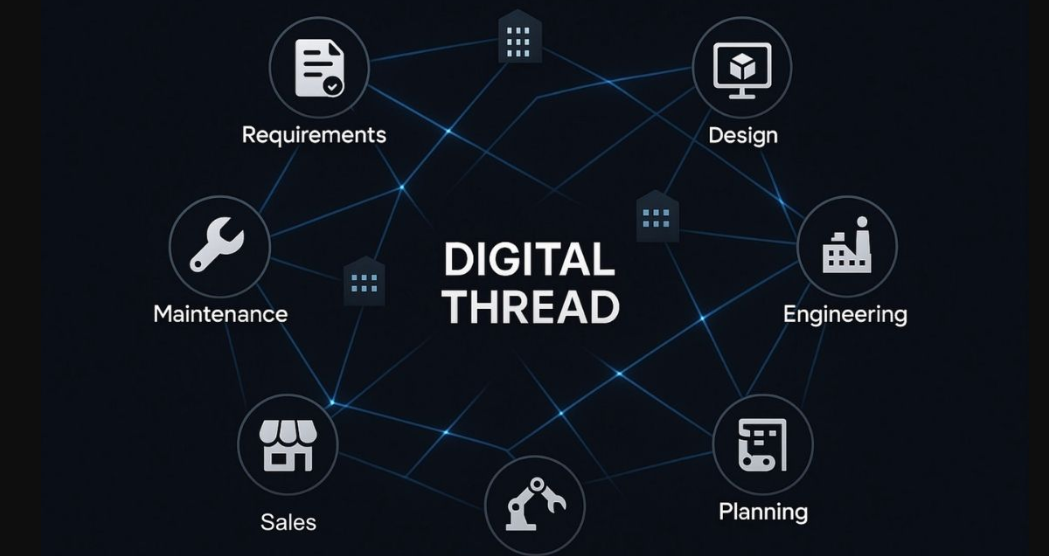
A Digital Thread unifies data and processes across the product lifecycle, creating transparent provenance for assets, decisions, and actions. It enables governance, collaboration, and supplier resiliency while supporting audit readiness and design validation. With real-time visibility, quality, traceability, and compliance improve, driving cross-functional alignment. The result is a scalable foundation for cost optimization and innovative capability—a compelling case that invites further exploration into how organizations can harness it to transform outcomes.
What a Digital Thread Is and Why It Matters
A digital thread is a unified, end-to-end data and process lineage that links every asset, requirement, decision, and action across the product lifecycle. It enables data governance, elevates collaboration efficiency, and strengthens supplier ecosystems.
Lifecycle transparency enhances audit readiness, accelerates design validation, and aligns manufacturing.
Seen entrepreneurially, it empowers freedom while guiding strategic, data-driven, cross-functional progress.
How It Tackles Quality, Traceability, and Compliance
How does a digital thread elevate quality, traceability, and compliance across complex ecosystems? It aligns design, manufacturing, and service data into a single provenance stream, enabling measurable reliability metrics. Clear lineage supports risk-informed decisions, reduces variance, and accelerates validation. Audit readiness emerges through automated evidence packs, standardized controls, and verifiable change histories, empowering autonomy while ensuring governance and consistent compliance.
See also: Benefits of Digital Immune Systems for Enterprises
Real-Time Collaboration Across Teams and Suppliers
With real time collaboration, organizations achieve tighter supplier synchronization, cross-functional alignment, and scalable workflows, empowering strategic autonomy while maintaining rigorous governance, quality, and data integrity.
Driving Innovation, Cost Optimization, and Resilience
An integrated data fabric informs a disciplined innovation strategy, aligning designers and operators toward rapid experimentation and validated outcomes.
This transparency enables cost efficiency, minimizes waste, and strengthens operational resilience, empowering freedom to adapt, scale, and pursue transformative opportunities with confidence.
Frequently Asked Questions
How Do You Measure ROI for Digital Thread Implementations?
ROI measurement techniques quantify digital thread value by comparing costs to quantified benefits, while data value assessment highlights information leverage, traceability, and risk reduction, enabling strategic decisions. The approach remains visionary, data-driven, and oriented toward freedom-seeking stakeholders.
What Are Common Integration Challenges With Legacy Systems?
One in three organizations reports significant downtime during integration, underscoring persistent legacy migration and API management fragility. The analysis emphasizes system consolidation, security patching, data lineage, vendor interoperability, real time analytics, cloud readiness, legacy modernization, unmarshaled interfaces.
How Is Data Ownership and Governance Defined?
Data ownership is defined as accountability for data assets under explicit stewardship, while governance definition establishes policies and controls; data stewardship aligns roles, and policy alignment ensures consistent standards, enabling strategic, data-driven freedom across organizational ecosystems.
What Training Is Required for Sustained Adoption?
Training is required for sustained adoption, aligning with governance protocols and continuous improvement. The organization defines adoption metrics, tracks progress, and adjusts programs to empower autonomous teams, ensuring a visionary, data-driven path that preserves freedom while strengthening accountability.
How Does a Digital Thread Address Cybersecurity Concerns?
Conjuring a guiding beacon, the digital thread mitigates cybersecurity implications through integrated threat modeling, traceable provenance, and immutable audit trails, enabling proactive resilience. It envisions data-driven safeguards, aligning strategic freedom with disciplined, collaborative risk reduction across ecosystems.
Conclusion
A Digital Thread maps reality with probabilistic precision: every asset, decision, and action stitched into a single provenance stream. As data accrues, governance tightens, and cross-functional clarity rises, organizations inch toward auditable inevitability. Yet satire hints: in a world where truth is traceable, who crafts the narrative when dashboards become the new prophets? The vision remains strategic—harness integration, elevate collaboration, and transform risk into resilient, data-driven advantage, before complacency computes the cost of silos.